Table of Contents
Learn the best practices for effective incident response in cybersecurity. Discover key steps to detect, contain, and recover from security incidents, while minimizing business impact and ensuring compliance. A must-read for businesses in the USA, Canada, and Australia.
In today’s digital-first world, cyber threats are no longer a “maybe” problem — they are a business certainty. From ransomware attacks to data breaches and system outages, organizations across the USA, Canada, and Australia face increasing security risks every day. This is where incident response becomes critical.
The goal of incident response is not just to fix security issues after they happen, but to minimize damage, reduce financial loss, maintain customer trust, and ensure business continuity. A well-planned incident response strategy can mean the difference between a minor disruption and a multimillion-dollar disaster.
What Is Incident Response?
Incident response is a structured approach to handling cybersecurity incidents, such as hacking attempts, malware infections, insider threats, or data leaks. It involves identifying, containing, eradicating, and recovering from security incidents as quickly and effectively as possible.
Businesses that invest in incident response services, managed security services, and cybersecurity incident response plans are better prepared to deal with evolving cyber threats.
Primary Goal of Incident Response
The main goal of incident response is to protect an organization’s digital assets while minimizing operational, legal, and financial impact. This goal can be broken down into several key objectives.
1. Minimize Business Disruption
One of the most important goals of incident response is to keep business operations running. Downtime can be extremely expensive, especially for industries like finance, healthcare, eCommerce, and SaaS.
A fast and effective response helps organizations:
- Reduce system downtime
- Prevent loss of revenue
- Maintain service availability for customers
2. Reduce Financial Loss and Recovery Costs
Cyber incidents can lead to massive financial losses due to:
- Data recovery expenses
- Legal fees
- Regulatory fines
- Loss of customer trust
An effective incident response plan helps limit these costs by containing the attack early and preventing it from spreading across networks.
Businesses in Canada, the USA, and Australia increasingly rely on cyber insurance, but insurers often require a documented incident response process to approve claims.
3. Protect Sensitive Data and Customer Information
Another critical goal of incident response is data protection. This includes:
- Personally Identifiable Information (PII)
- Financial records
- Intellectual property
- Healthcare and compliance-related data
With strict regulations such as GDPR, HIPAA, and PCI-DSS, organizations must demonstrate that they took immediate action to protect sensitive data during a breach.
4. Maintain Brand Reputation and Customer Trust
Reputation damage is often worse than the technical damage itself. Customers expect businesses to protect their data and respond professionally when incidents occur.
A strong incident response strategy helps companies:
- Communicate transparently with stakeholders
- Avoid public relations disasters
- Preserve brand credibility
Organizations that respond quickly and responsibly are far more likely to retain customers after a cyber incident.
5. Ensure Legal and Regulatory Compliance
Many countries, including the US, Canada, and Australia, have strict breach notification laws. Incident response teams help ensure:
- Timely reporting to authorities
- Accurate documentation of the incident
- Compliance with industry regulations
Failure to comply can result in severe penalties and lawsuits, making incident response a legal necessity, not just a technical one.
6. Identify the Root Cause of the Incident
Incident response is not only about fixing the immediate problem. A key goal is to identify how and why the incident occurred.
This includes:
- Analyzing attack vectors
- Detecting security gaps
- Improving future defense strategies
This proactive approach helps businesses strengthen their cybersecurity posture and prevent similar attacks in the future.
7. Improve Future Security and Preparedness
Each incident provides valuable lessons. A mature incident response program uses these insights to:
- Update security policies
- Improve employee awareness training
- Enhance threat detection systems
Many organizations now invest in 24/7 security operations centers (SOC) and managed incident response services to stay ahead of emerging threats.
Why Incident Response Is a Business Investment, Not an Expense
Modern cyber threats are sophisticated and persistent. Investing in professional incident response services is no longer optional — it’s a smart business decision.
Benefits include:
- Faster threat containment
- Lower long-term security costs
- Increased customer confidence
- Better cyber insurance eligibility
When Is Incident Response Needed?
Incident response is needed the moment there is any sign that your systems, data, or network security may be compromised. Waiting for full confirmation often makes the damage worse. Experienced security teams treat suspicion as enough reason to act.
1. When a Data Breach Is Suspected or Confirmed
Incident response is immediately required if there is:
- Unauthorized access to customer or employee data
- Exposure of personally identifiable information (PII)
- Leaked financial, healthcare, or login credentials
Even a suspected data breach triggers legal and compliance obligations in many regions. A fast response helps limit data loss and meet breach notification laws.
2. During a Ransomware or Malware Attack
Ransomware attacks can spread across systems within minutes. Incident response is needed when:
- Files are encrypted or locked
- Ransom notes appear
- Systems behave abnormally or slow down suddenly
Immediate containment can prevent the attack from reaching backups, cloud environments, and critical servers.
3. When Systems Show Unusual or Suspicious Activity
Not all incidents are obvious. Incident response should be triggered when security teams notice:
- Multiple failed login attempts
- Unrecognized admin accounts
- Unexpected system configuration changes
- Unusual network traffic
These warning signs often indicate active cyber threats or ongoing intrusion attempts.
4. After Phishing or Social Engineering Attacks
Incident response is required if:
- Employees click malicious links
- Credentials are entered into fake login pages
- Malware is downloaded through email or SMS
Phishing remains one of the leading causes of data breaches. Quick response helps reset credentials, isolate infected devices, and prevent lateral movement.
5. When Critical Systems Go Offline Unexpectedly
Unplanned outages may be caused by:
- Distributed denial-of-service (DDoS) attacks
- Server compromise
- Cloud misconfigurations
Incident response teams investigate whether the outage is accidental or malicious and work to restore secure operations quickly.
6. If Insider Threats Are Detected
Incident response is also necessary when:
- Employees misuse access privileges
- Sensitive data is accessed without authorization
- Intellectual property is copied or exfiltrated
Insider threats — both malicious and accidental — require careful investigation and documentation.
7. When Compliance or Legal Obligations Are Triggered
Many regulations require immediate action when security incidents occur. Incident response is needed to:
- Document the incident
- Preserve forensic evidence
- Notify regulators and affected parties on time
This is especially critical for organizations in regulated industries such as healthcare, finance, and eCommerce.
8. After Third-Party or Supply Chain Incidents
If a vendor, cloud provider, or software partner suffers a security incident that affects your data or systems, incident response should be activated immediately. Third-party breaches are increasingly common and can carry shared liability.
Why Acting Early Matters
From an expert cybersecurity standpoint, early incident response dramatically reduces damage. Organizations that respond within the first few hours experience:
- Lower recovery costs
- Shorter downtime
- Less data loss
- Stronger legal and compliance outcomes
This is why many companies rely on 24/7 incident response services or managed detection and response (MDR) providers.
The Incident Response Plan: for Modern Organizations
An Incident Response Plan (IRP) is a documented, step-by-step framework that explains how an organization detects, responds to, contains, and recovers from cybersecurity incidents. For businesses operating in the United States, Canada, and Australia, an incident response plan is no longer optional — it is a core requirement for risk management, compliance, and business continuity.
A well-designed incident response plan reduces downtime, limits financial loss, protects sensitive data, and demonstrates due diligence to regulators, insurers, and customers.
What Is an Incident Response Plan?
An incident response plan is a formal, written policy that defines:
- What qualifies as a security incident
- Who is responsible for responding
- How incidents are reported and escalated
- Which tools and processes are used
- How recovery and post-incident review are handled
From an EEAT perspective, mature organizations align their plans with recognized cybersecurity standards such as NIST, ISO, and industry best practices.
Why Every Organization Needs an Incident Response Plan
Cyber incidents are inevitable. What separates resilient organizations from vulnerable ones is preparedness.
Key benefits of having an incident response plan include:
- Faster detection and containment of threats
- Reduced business disruption and downtime
- Lower incident response and recovery costs
- Improved regulatory and legal compliance
- Increased customer and stakeholder trust
Cyber insurance providers and auditors increasingly require documented incident response procedures as part of risk assessments.
Core Components of an Incident Response Plan
1. Preparation
Preparation is the foundation of effective incident response. This phase focuses on:
- Defining roles and responsibilities
- Establishing an incident response team
- Maintaining security tools and monitoring systems
- Training employees on incident reporting
Organizations that invest in preparation respond faster and make fewer mistakes during real incidents.
2. Identification and Detection
This phase involves recognizing potential security incidents through:
- Security alerts and logs
- Endpoint detection and response (EDR) tools
- Network monitoring
- Employee reports
Early identification is critical to minimizing damage and preventing escalation.
3. Containment
Containment limits the spread of an incident and protects unaffected systems. This may include:
- Isolating infected devices
- Disabling compromised accounts
- Blocking malicious IP addresses
Short-term containment focuses on immediate control, while long-term containment ensures systems remain secure during recovery.
4. Eradication
Once the threat is contained, eradication removes the root cause of the incident by:
- Eliminating malware
- Closing vulnerabilities
- Removing unauthorized access
This step ensures the attacker cannot re-enter the environment.
5. Recovery
Recovery restores systems to normal operations in a secure manner. This includes:
- Restoring data from verified backups
- Monitoring systems for recurring threats
- Validating system integrity
Organizations should avoid rushing recovery without proper verification, as this can reintroduce risk.
6. Lessons Learned and Improvement
After the incident is resolved, a post-incident review is conducted to:
- Document what happened
- Assess response effectiveness
- Identify gaps in controls or processes
- Update the incident response plan
This continuous improvement process strengthens long-term cybersecurity posture.
Roles and Responsibilities in an Incident Response Plan
A strong plan clearly defines accountability. Common roles include:
- Incident Response Lead
- IT and Security Teams
- Legal and Compliance Representatives
- Executive Management
- External Incident Response or Forensic Experts
Clear ownership prevents confusion during high-pressure situations.
Incident Response Plan and Compliance Requirements
Many regulations and standards require documented incident response procedures, including:
- Data protection and privacy laws
- Industry security standards
- Contractual and cyber insurance obligations
An up-to-date incident response plan demonstrates due diligence and accountability in the event of audits or investigations.
Best Practices for Maintaining an Effective Incident Response Plan
To keep an incident response plan effective:
- Review and update it regularly
- Conduct tabletop exercises and simulations
- Test communication and escalation paths
- Align with changes in infrastructure and threats
Organizations often partner with managed incident response service providers to maintain readiness.
The Incident Management Process
The Incident Management Process is a structured approach to handling cybersecurity events in an efficient, organized, and systematic way. It’s designed to minimize the impact of security incidents on an organization’s operations, protect sensitive data, and ensure compliance with legal and regulatory requirements.
What Is the Incident Management Process?
The Incident Management Process refers to a series of coordinated actions and protocols that an organization follows to respond to and resolve a cybersecurity incident. It involves multiple stages from the initial detection of an issue to the final resolution and post-incident analysis.
An effective incident management process is crucial not only for fixing technical issues but also for managing the business impact. Its goal is to restore normal operations as quickly as possible while protecting data, ensuring compliance, and maintaining customer trust.
Key Phases of the Incident Management Process
The incident management process can be broken down into several phases, which collectively guide an organization from incident detection to post-incident improvement.
1. Incident Identification and Detection
The first phase of incident management is identifying and detecting the incident as early as possible. This step is critical because early detection can significantly reduce the damage caused by cyber threats.
Tools and methods involved:
- Security Information and Event Management (SIEM) systems
- Endpoint detection and response (EDR) tools
- Network intrusion detection systems (NIDS)
- Employee-reported anomalies or suspicious activities
Indicators of incidents may include:
- Unexpected system crashes
- Unexplained network activity
- Unusual access logs or failed login attempts
The faster an incident is detected, the faster it can be contained and remediated, thus limiting its impact.
2. Incident Logging and Categorization
Once an incident is detected, it needs to be logged in a centralized system and categorized based on its severity and impact. This step allows incident response teams to prioritize which incidents need immediate attention and which ones can be handled later.
Key actions:
- Logging the incident details, such as the type of threat, affected systems, and initial observations
- Categorizing incidents based on predefined criteria (e.g., malware, data breach, DDoS attack)
- Assigning a priority level based on severity (Critical, High, Medium, Low)
Accurate logging and categorization allow for faster response and ensure that the right resources are allocated to address the incident.
3. Incident Triage and Prioritization
Incident triage involves reviewing the logged incidents and determining which ones require the most urgent response. This is where organizations distinguish between low-risk events and more critical incidents that could affect business continuity or cause data loss.
Key decisions during triage:
- Is the incident active or contained?
- What systems or data are affected?
- What is the potential impact on operations, customers, and compliance?
- Which resources (personnel, tools, etc.) are needed for resolution?
By effectively triaging and prioritizing incidents, organizations can avoid being overwhelmed by a large volume of alerts while addressing the most critical threats first.
4. Containment
Once the incident is identified and prioritized, the next step is to contain the threat to prevent it from spreading further within the network. Containment aims to limit the damage and prevent additional systems from being compromised.
Containment strategies might include:
- Isolating affected systems or devices from the network
- Shutting down compromised accounts or services
- Blocking malicious IP addresses or domains
- Disconnecting certain servers or applications from the internet
Short-term containment focuses on stopping the immediate damage, while long-term containment ensures that systems can be securely restored without further risk.
5. Eradication
Once containment is successful, the next step is eradication — eliminating the root cause of the incident. This could involve removing malware, deleting malicious files, or patching vulnerabilities.
Actions in the eradication phase:
- Removing malicious software or scripts
- Closing exploited security vulnerabilities
- Resetting compromised passwords or accounts
- Applying security patches or updates
Eradication ensures that the incident is fully resolved and that there are no lingering threats that could resurface.
6. Recovery
The recovery phase focuses on restoring affected systems and services back to their normal, secure operating state. The goal is to bring business operations back online as quickly as possible, with minimal risk of re-infection.
Key recovery steps:
- Restoring data from secure backups
- Bringing affected systems back online after ensuring they are secure
- Conducting system integrity checks
- Monitoring systems for any signs of recurring issues
Once systems are fully restored, continued monitoring is essential to ensure that the incident does not recur.
7. Post-Incident Analysis and Reporting
The final phase of the incident management process is post-incident analysis, which involves evaluating the incident response process and learning from the experience to improve future preparedness.
Post-incident actions:
- Documenting the incident, including cause, impact, and the steps taken during the response
- Analyzing the effectiveness of the response to identify areas for improvement
- Creating a final report for senior management, stakeholders, and regulators if required
- Updating the incident response plan based on lessons learned
- Conducting a debriefing session with the response team
Post-incident analysis helps the organization strengthen its cybersecurity posture, improves future response capabilities, and ensures compliance with cybersecurity standards and regulatory requirements.
Best Practices for Effective Incident Response
Here are some best practices for effective incident response, designed to help organizations in the USA, Canada, and Australia (and beyond) strengthen their cybersecurity defenses and recover from cyberattacks efficiently.
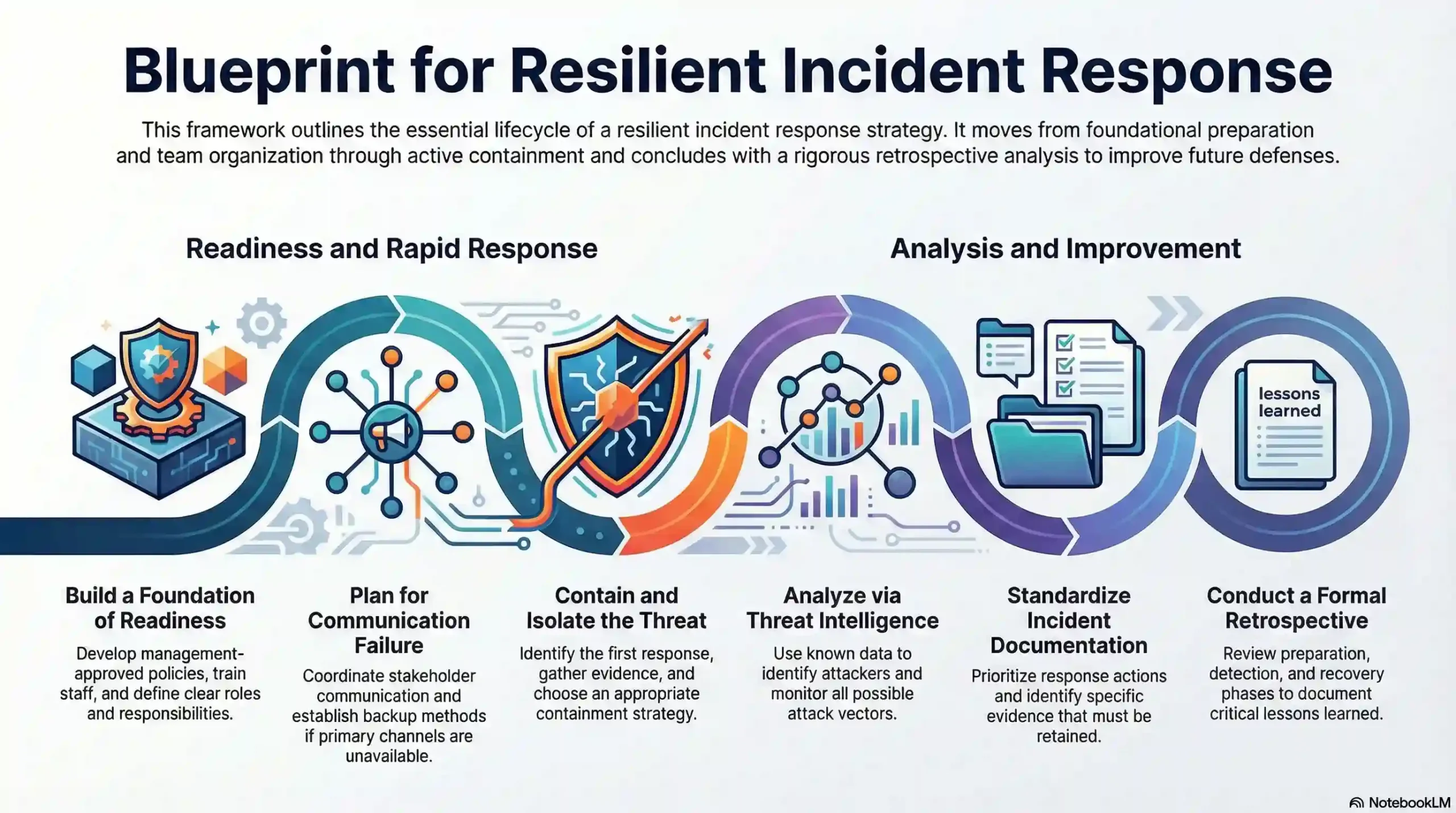
1. Develop and Maintain a Comprehensive Incident Response Plan
A well-documented Incident Response Plan (IRP) is the foundation of any effective response. It provides clear guidance on how to respond to different types of incidents and ensures that all team members understand their roles and responsibilities.
Key Steps:
- Define roles and responsibilities: Assign clear ownership within the incident response team (IRT) for tasks like communication, investigation, and recovery.
- Develop incident categorization: Classify incidents based on severity, business impact, and urgency. This allows the team to prioritize effectively.
- Regularly update and review the plan: Ensure the plan evolves to reflect the latest threats, technologies, and business changes.
Best Practice Tip:
Perform regular tabletop exercises and incident simulations to ensure your team is familiar with the plan and can respond quickly under pressure.
2. Implement 24/7 Monitoring and Threat Detection
To effectively respond to incidents, you need to detect them early. Real-time monitoring is essential to identifying suspicious activity and potential threats before they escalate.
Key Steps:
- Deploy Security Information and Event Management (SIEM) tools to collect and analyze security logs in real time.
- Use Endpoint Detection and Response (EDR) tools to monitor for malicious activities across all endpoints.
- Integrate automated alerting systems to notify the team immediately when an anomaly is detected.
Best Practice Tip:
Behavioral analytics tools can help identify threats by recognizing patterns of suspicious activity, even if the threat has not been seen before.
3. Ensure Effective Incident Communication
Clear, concise, and timely communication is crucial during an incident. Stakeholders—including technical teams, management, customers, and regulators—must be kept informed throughout the incident.
Key Steps:
- Designate a communication lead: Ensure someone is responsible for managing internal and external communications.
- Maintain a communication log: Document all decisions, actions, and notifications made during the incident.
- Have predefined templates for incident updates and notifications, including emails, public statements, and legal notices.
Best Practice Tip:
Pre-define escalation paths for different incident severities, ensuring that the right people are involved as soon as possible.
4. Contain the Incident Quickly and Effectively
The faster you can contain an incident, the less damage it will cause. Containment involves isolating compromised systems, stopping the spread of malicious activities, and preventing further exploitation of vulnerabilities.
Key Steps:
- Isolate affected systems: Disconnect compromised devices from the network to prevent lateral movement and further compromise.
- Block malicious IP addresses and domains: Use firewalls and network filters to block attack vectors.
- Disable compromised accounts: If a breach involves credentials, reset or lock the affected accounts immediately.
Best Practice Tip:
Ensure that incident containment strategies are pre-planned and tested, so the response team can act immediately without having to make critical decisions under pressure.
5. Conduct Thorough Root Cause Analysis (RCA)
Once the immediate threat is contained, the next step is to investigate and understand the root cause of the incident. Identifying how the attack happened is essential for preventing future breaches.
Key Steps:
- Forensic analysis: Use forensic tools to examine logs, network traffic, and compromised systems to understand the method of attack.
- Identify attack vectors: Whether it’s a phishing email, a vulnerability exploit, or a compromised third-party service, determining the attack vector helps improve future defenses.
- Document findings: Maintain thorough documentation of your findings for compliance, future reference, and reporting purposes.
Best Practice Tip:
Post-incident analysis should also look at the effectiveness of the initial response, ensuring lessons learned are integrated into the organization’s security posture.
6. Restore Systems and Recover Data
The recovery phase aims to return systems to normal and ensure that all compromised data is restored to a secure state. This can involve reimaging systems, restoring backups, and applying patches.
Key Steps:
- Restore from backups: Ensure that backups are clean and unaffected before restoring them to production systems.
- Reinforce security: Apply security patches, fix configuration issues, and make necessary changes to prevent the same incident from occurring again.
- Monitor systems: Post-recovery, continuously monitor systems for any signs of residual threats or unusual activity.
Best Practice Tip:
Test disaster recovery (DR) procedures regularly to ensure data can be restored quickly, and system integrity checks are performed before bringing systems back online.
7. Continuously Improve with Lessons Learned
The post-incident review is one of the most important parts of an effective incident response. Analyzing the response process itself helps the organization understand what worked well and where improvements are needed.
Key Steps:
- Hold a post-mortem meeting: Involve all key stakeholders to discuss the incident, the response, and the outcome.
- Update your incident response plan: Use the findings from the post-incident analysis to refine processes and strengthen defenses.
- Share lessons learned: Ensure that the broader organization is aware of the findings, including new threats, best practices, and updated security measures.
Best Practice Tip:
Regularly audit and improve your security tools, policies, and training programs based on lessons learned from real incidents and simulated exercises.
8. Ensure Compliance and Legal Considerations
Effective incident response must be aligned with both regulatory and legal requirements, especially when dealing with personal data or industries with strict cybersecurity laws.
Key Steps:
- Document everything: Maintain a record of all incident-related activities, including decision-making processes, to comply with legal and regulatory obligations.
- Report incidents: In some regions (like GDPR in Europe or HIPAA in the U.S.), certain types of breaches must be reported within a specific time frame.
- Coordinate with external parties: In some cases, you may need to work with law enforcement, cyber insurance providers, or third-party vendors during the investigation and remediation phases.
Best Practice Tip:
Establish relationships with external forensics experts, legal advisors, and public relations firms in advance to ensure a coordinated response when necessary.
9. Use Automation and Orchestration Tools
The incident response process can be enhanced by automation and orchestration tools that speed up routine tasks and allow the response team to focus on more strategic actions.
Key Steps:
- Automate data collection: Use security automation tools to quickly gather relevant logs and information from across your network.
- Use response playbooks: Automate common incident response actions such as isolating a machine or blocking a malicious IP address.
- Integrate security tools: Use security orchestration to integrate different security systems (e.g., SIEM, EDR, firewalls) for more efficient responses.
Best Practice Tip:
Automation can help reduce the risk of human error and improve response time, especially when dealing with high-volume incidents or complex threats.
10. Training and Awareness
A proactive approach to incident response requires ongoing training for all team members. The better prepared your organization is, the faster and more effectively it can respond to an incident.
Key Steps:
- Regularly train your incident response team: Conduct regular training on the latest threats, tools, and response techniques.
- Run phishing simulations: This will help employees recognize potential threats and reduce the likelihood of incidents caused by human error.
- Keep leadership involved: Ensure executives and managers are aware of the incident response process and their roles in crisis communication and decision-making.
Best Practice Tip:
Invest in cybersecurity awareness programs that not only train the incident response team but also educate the entire organization on safe practices.
Conclusions
An effective incident response process is essential for reducing the impact of security breaches, minimizing downtime, and protecting sensitive data. By implementing these best practices, organizations can ensure they are well-prepared to handle cyber threats in a timely and efficient manner, while also improving their overall cybersecurity posture.